
Almost every couple tells me the same thing on our first call. Usually around the twenty-minute mark, once the venue talk is done and they've relaxed a little. It comes out half-apologetically, like a confession:
"We should warn you, we're really awkward on camera."
I've heard it from surgeons. From people who speak in front of hundreds at work. From a bride who had been on national television. It arrives so consistently that I've stopped treating it as information about the couple and started treating it as information about cameras.
So let me say the useful thing first: I have never met a couple who looked awkward in their finished film. Not once. And it isn't because I'm working with unusually photogenic people. It's because "being awkward on camera" describes a specific situation, one that barely exists on a wedding day.
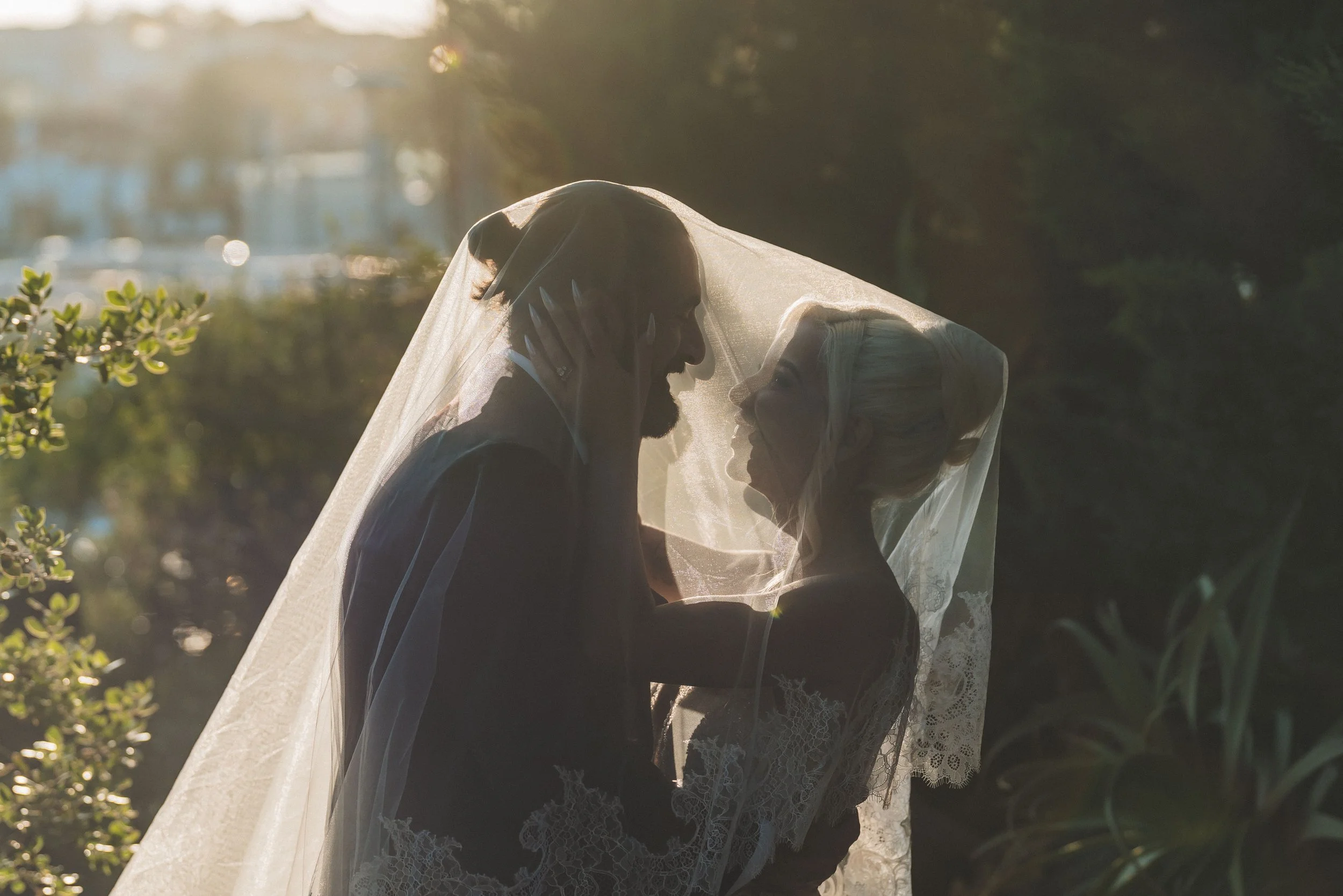
What you're actually afraid of
When you picture yourself being filmed, you're picturing a particular scenario. Someone is pointing a lens at you. They're waiting. You're aware of your hands, suddenly, and of the fact that your face is doing something. There's nothing to do but be looked at.
That scenario is genuinely uncomfortable. I'd feel it too. But notice what it's missing: anything to do. No task, no person to talk to, nowhere to be. Just the looking.
Your wedding day is the opposite of that. You are going to be the busiest you have ever been. Your mother is going to say something that undoes you. Someone will hand you a drink. A friend you haven't seen in four years walks through the door. You have to remember where you left the rings. A ceremony happens, and then you are married, and that lands in your body whether you planned for it to or not.
There is simply no room left over for self-consciousness. That's the whole secret, and it isn't a technique, it's just what a wedding day does to people.
I notice performance before I notice anything else
I should explain why this is the part of the job I care most about.
I grew up not hearing well. For years, before anyone worked out what was going on, I was reading people instead of listening to them, faces, shoulders, the space between two bodies, the half-second before someone decides to smile. I wasn't being observant on purpose. I just had no other way of knowing what was happening in a room.
That's followed me into the work. I can tell, almost instantly, when a face changes register, when someone shifts from feeling something to presenting something. It's a tiny movement, and once you've spent your life watching for it, you can't unsee it.
So when a couple worries about looking unnatural, they're worrying about the exact thing I've built my whole approach around avoiding. I don't want the presented version. It isn't more flattering, it's just less like you. The footage I'm actually hunting for is the unguarded stuff, and unguarded moments don't survive being asked for.
Which is why I don't ask.
The plan is that there mostly isn't one
Here's what my presence on your day actually looks like.
During getting ready: I'm in the corner. I'll introduce myself, learn names, and then largely disappear into the furniture. If you notice me, it should be in the way you notice a lamp. Nobody gets asked to redo a moment. If your father sees you and has to look at the ceiling for a second to collect himself, that happens once, and I am either there for it or I'm not, I'd rather risk missing it than manufacture a second version.
During the ceremony: I'm at a distance, with long lenses, precisely so you never register where I'm standing. You should be thinking about the person in front of you. That's it.
During the reception: Same principle. Speeches, the first dance, the uncle who has committed fully to the dancefloor. It unfolds; I follow.
There is exactly one part of the day where I'll actually direct you, and it's worth explaining properly.
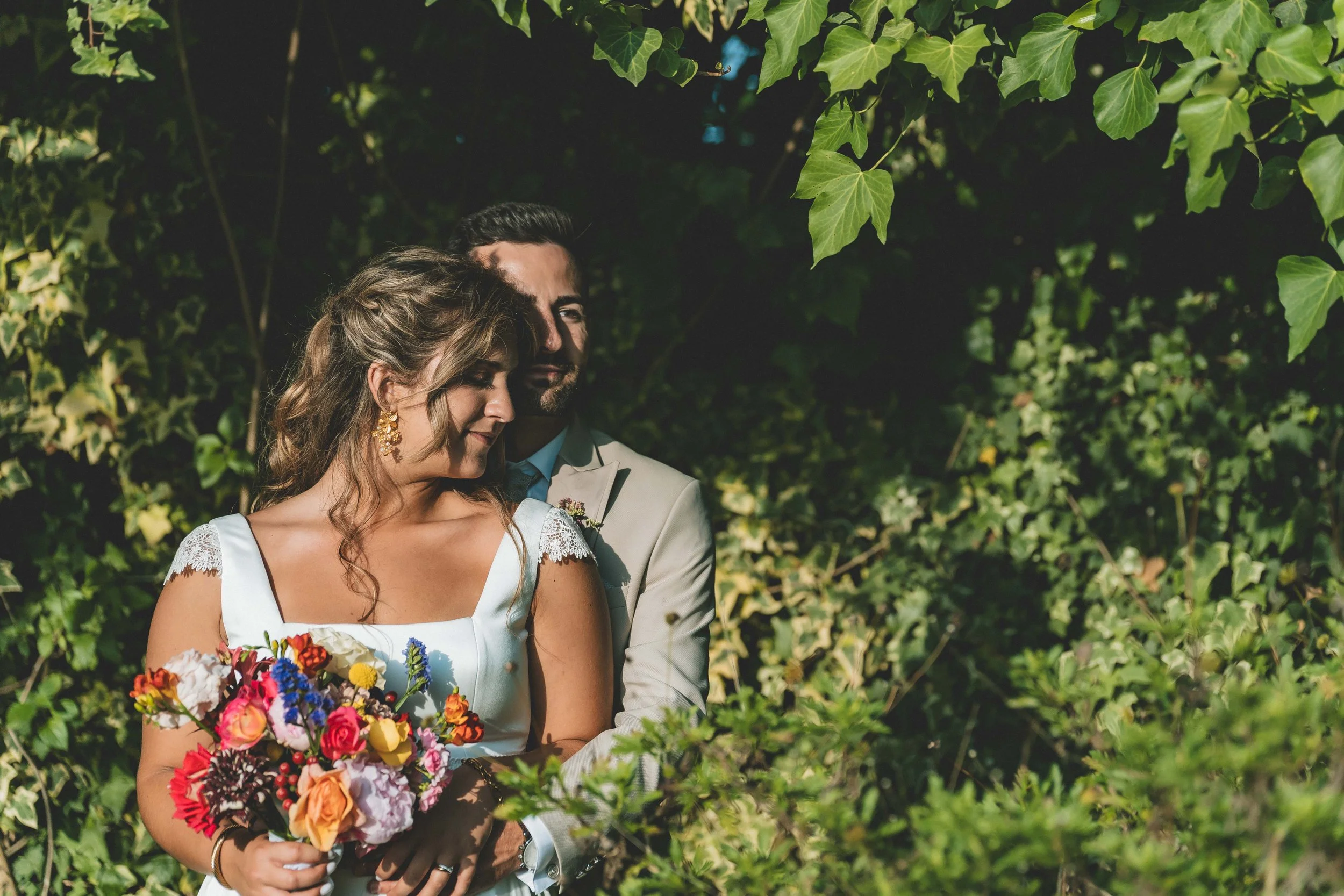
The portraits: how I get you through the only tricky bit
Twenty to thirty minutes, usually near golden hour, when the light in Portugal does the thing it does and makes everything look like a memory. This is the only stretch where you're aware of being photographed and filmed, and it's the part couples dread most.
So I don't pose you. Poses are where awkwardness comes from, a pose is a shape you have to hold while thinking about holding it.
Instead I give you something to do. Walk to that wall and back, slowly. Tell him what you thought when you first saw him this morning. Stand here and just breathe for a second, you've been running since 7am. Put your forehead against hers.
They sound almost too simple. But a task gives your body somewhere to go, and while you're doing it, something real happens between the two of you, and the real thing is what I'm filming. Couples routinely tell me afterwards that this was their favourite twenty minutes of the day, often the only time they were alone together between the ceremony and midnight.
A few things that genuinely help
Not rules. Just what I've noticed over many weddings.
Keep hold of each other. Hands, waist, arm, physical contact does most of the work that posing tries and fails to do. It gives you an anchor, and it reads as intimacy rather than arrangement.
Don't wait to look your best before you feel things. The crying is the good part. Every couple who tries to hold it together during the vows ends up wishing they hadn't. A blotchy face in motion is more beautiful on film than a composed one, every single time. I promise.
Wear something you can move in. Not a style note, a practical one. If you're managing a neckline or a shoe all day, that management shows up in your shoulders.
Let's meet before the day. Even a video call. Most of the strangeness of being filmed is the strangeness of being watched by a stranger. Once you know who I am and how I work, the camera stops being an anonymous object and becomes just Bernardo, over there, doing his thing.
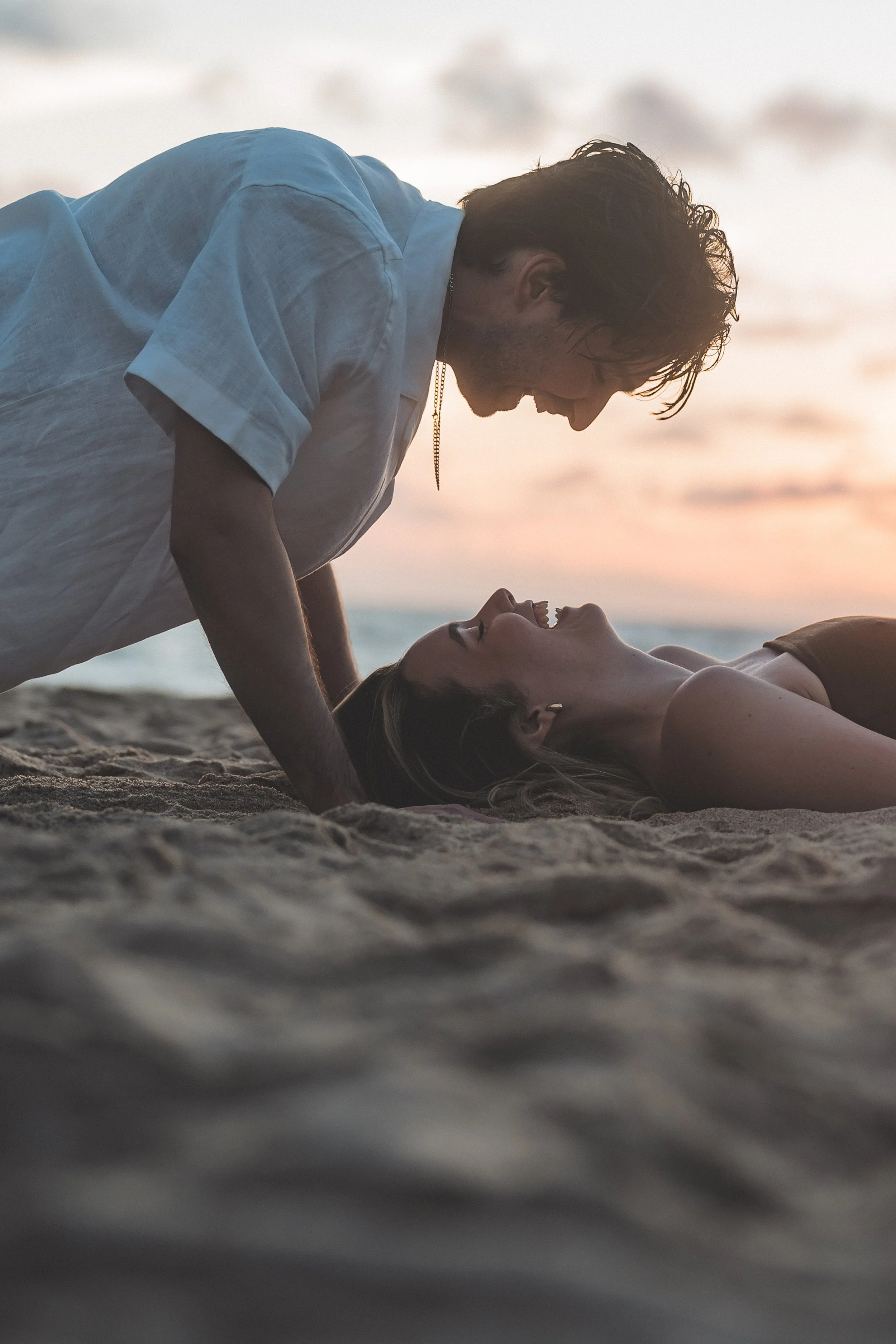
If you're getting married in Portugal from abroad
One thing I'd add for the couples who fly in.
If you're planning from New York or London or São Paulo, you'll likely be meeting most of your suppliers for the first time in the same week you get married, often jetlagged, often with family logistics running in the background. That can heighten the sense of being surrounded by people you don't know.
It's the main reason I insist on a proper conversation beforehand, and why I like to arrive early on the day. By the time anything is filmed, I want to be a familiar face rather than another vendor. It costs me nothing and it changes the footage completely.
What I'm actually looking for
I don't film weddings, really. I film the way two people look at each other when they think no one is watching.
That's not a slogan I came up with to sound nice, it's a literal description of what I'm doing all day. I'm waiting for the moments in between: the hand squeeze before you walk in, the thing whispered during a speech that only one other person hears, the way you check for each other across a room without meaning to.
Those moments already belong to you. You don't have to perform them, produce them, or be good at them. You just have to have the day you were going to have anyway.
I'll take care of the rest.
Planning a wedding in Portugal? Let's talk about your day →
